

Stepping into my cozy kitchen the other evening, the aroma of something delicious pulled me in—a simple yet elegant representation of a shellfish adventure taken to the next level. That’s when I decided to whip up this Baked Dijon Salmon, a recipe that’s become a staple in my weeknight rotation. Not only is this dish rich in omega-3s, making it a healthy choice, but it also transforms ordinary nights into memorable culinary experiences. The crunchy pecan crust gives just the right amount of texture to the tender, juicy salmon beneath, ensuring it’s not just another meal but a delightful feast. What’s even better? This beginner-friendly recipe takes just 30 minutes to prepare, leaving you more time to savor each bite. Ready to elevate your dinner game? Let’s dive into making this mouthwatering dish together!
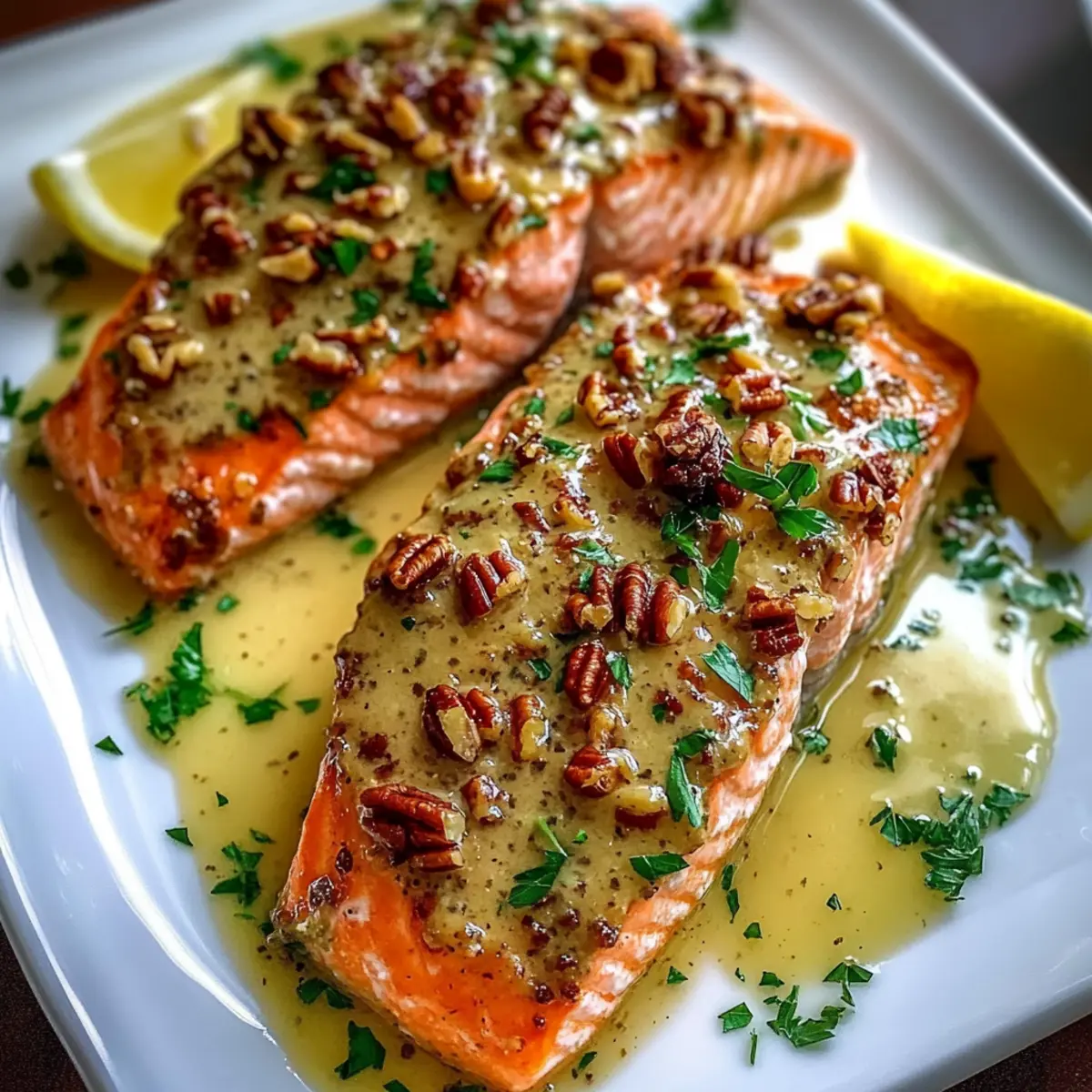
Why is Baked Dijon Salmon a Must-Try?
Simplicity at its finest: This recipe features easy-to-follow steps, making it perfect even for beginner cooks.
Nutty delight: The pecan crust introduces a delightful crunch, enhancing the tender salmon beneath.
Flavor balance: The combination of Dijon mustard and honey creates a wonderful sweet and tangy profile.
Health benefits: Packed with omega-3s, this dish supports heart health while satisfying your taste buds.
Flexibility: Feel free to explore substitutions, like walnuts or spicy mustard, to tailor the recipe to your preferences. Pair this with a refreshing salad or lemon herb rice for a complete meal experience!
Baked Dijon Salmon Ingredients
Here’s everything you need to create this deliciously easy dish!
For the Salmon
- Salmon Fillets – Use fresh or properly thawed frozen salmon for the best flavor and texture.
- Salt and Pepper – Be generous with seasoning to ensure that the salmon is flavorful throughout.
For the Glaze
- Butter – Adds richness and moisture, helping the glaze adhere beautifully.
- Dijon Mustard – Provides tanginess and depth, perfectly balancing the richness of the salmon.
- Honey – Aids in creating a caramelized finish, balancing the mustard’s acidity with sweetness.
For the Crunchy Topping
- Dry Breadcrumbs – Creates a crunchy topping that complements the tender salmon beneath.
- Pecans – Introduce a nutty flavor that adds a satisfying texture; feel free to substitute with walnuts for variation.
- Fresh Parsley – Adds a pop of color and brightness to the dish.
Optional Garnish
- Lemon – A squeeze just before serving elevates the dish with acidity and brightness; don’t skip this!
Step‑by‑Step Instructions for Baked Dijon Salmon
Step 1: Preheat the Oven
Begin by preheating your oven to 400°F (200°C). This ensures that when you’re ready to bake, your Baked Dijon Salmon will cook evenly and beautifully. Use an oven thermometer if needed to confirm the temperature, allowing for consistent results.
Step 2: Prepare the Glaze
In a mixing bowl, combine melted butter, Dijon mustard, and honey. Whisk these ingredients together until smooth and well-blended, creating a rich glaze that will enhance the salmon’s flavor. Set this mixture aside, as it will be used to coat the fish later, adding tanginess and sweetness.
Step 3: Mix the Crunchy Topping
In another bowl, blend the dry breadcrumbs, chopped pecans, and fresh parsley. Stir until everything is evenly distributed, creating a crunchy topping that will add texture to your Baked Dijon Salmon. This combination of flavors will not only enhance the dish but also provide a delightful contrast to the tender fish.
Step 4: Prepare the Baking Sheet
Lightly grease a baking sheet with cooking spray or a small amount of butter to prevent sticking. Place the salmon fillets on the sheet with the skin side down, ensuring they have enough space to cook evenly. Generously season each fillet with salt and pepper to elevate their natural flavors before layering on the glaze.
Step 5: Apply the Glaze
Now, evenly spread the Dijon mustard glaze over each salmon fillet, ensuring that every piece is well-coated. This glaze will not only impart incredible flavor but also keep the salmon moist while baking. Be sure to cover the entire surface, allowing the glaze to enhance the cooking process.
Step 6: Add the Crunchy Topping
Next, take the breadcrumb mixture and press it gently onto the top of the glazed salmon. Make sure to cover the fillets thoroughly, as this will create a deliciously crunchy crust once baked. This step adds both flavor and a beautiful presentation to your Baked Dijon Salmon.
Step 7: Bake the Salmon
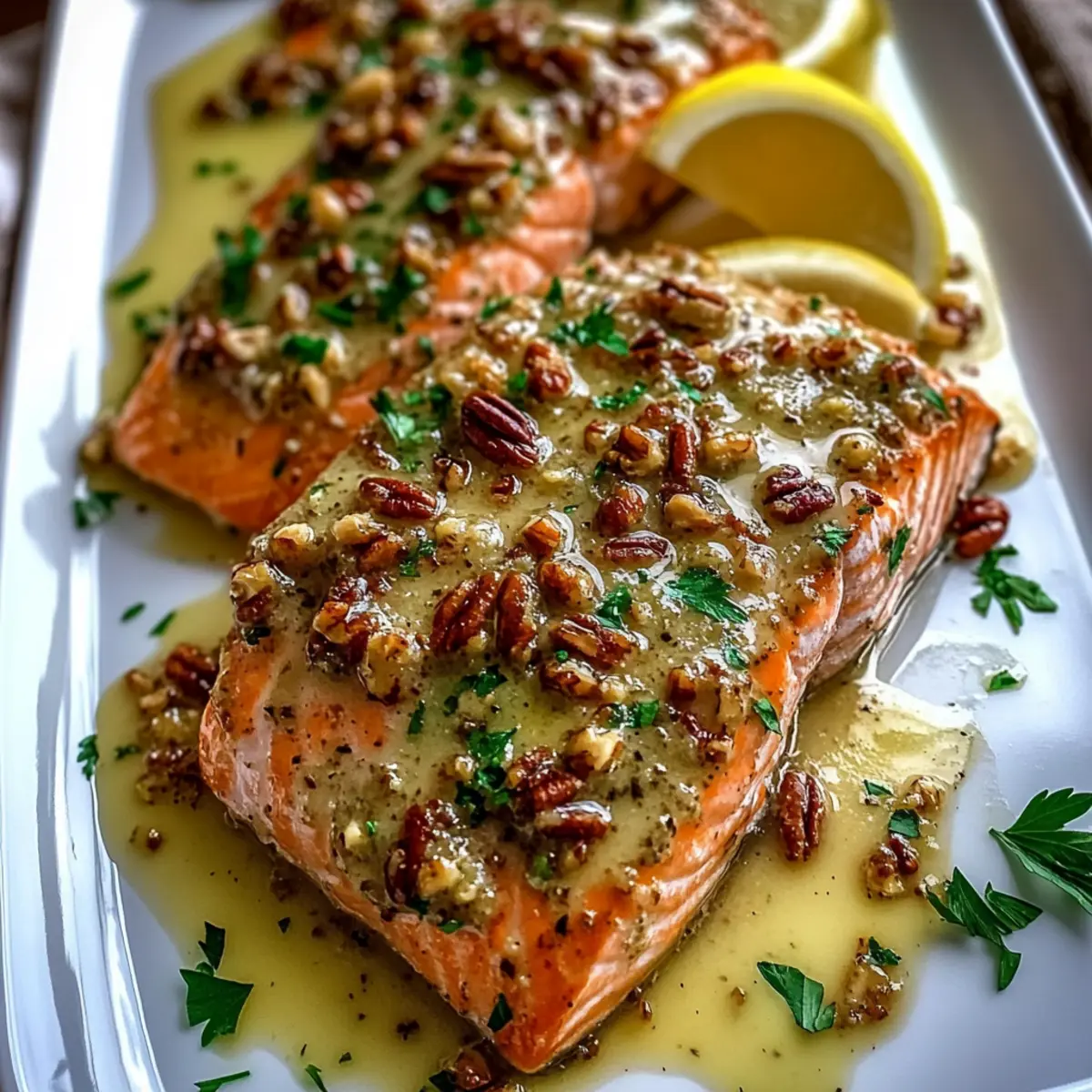
Carefully place the baking sheet in your preheated oven and bake for 12-15 minutes. Keep an eye on the salmon; you’ll know it’s ready when the fish flakes easily with a fork and the topping turns golden brown. This way, the Baked Dijon Salmon is perfectly cooked and visually appealing.
Step 8: Garnish and Serve
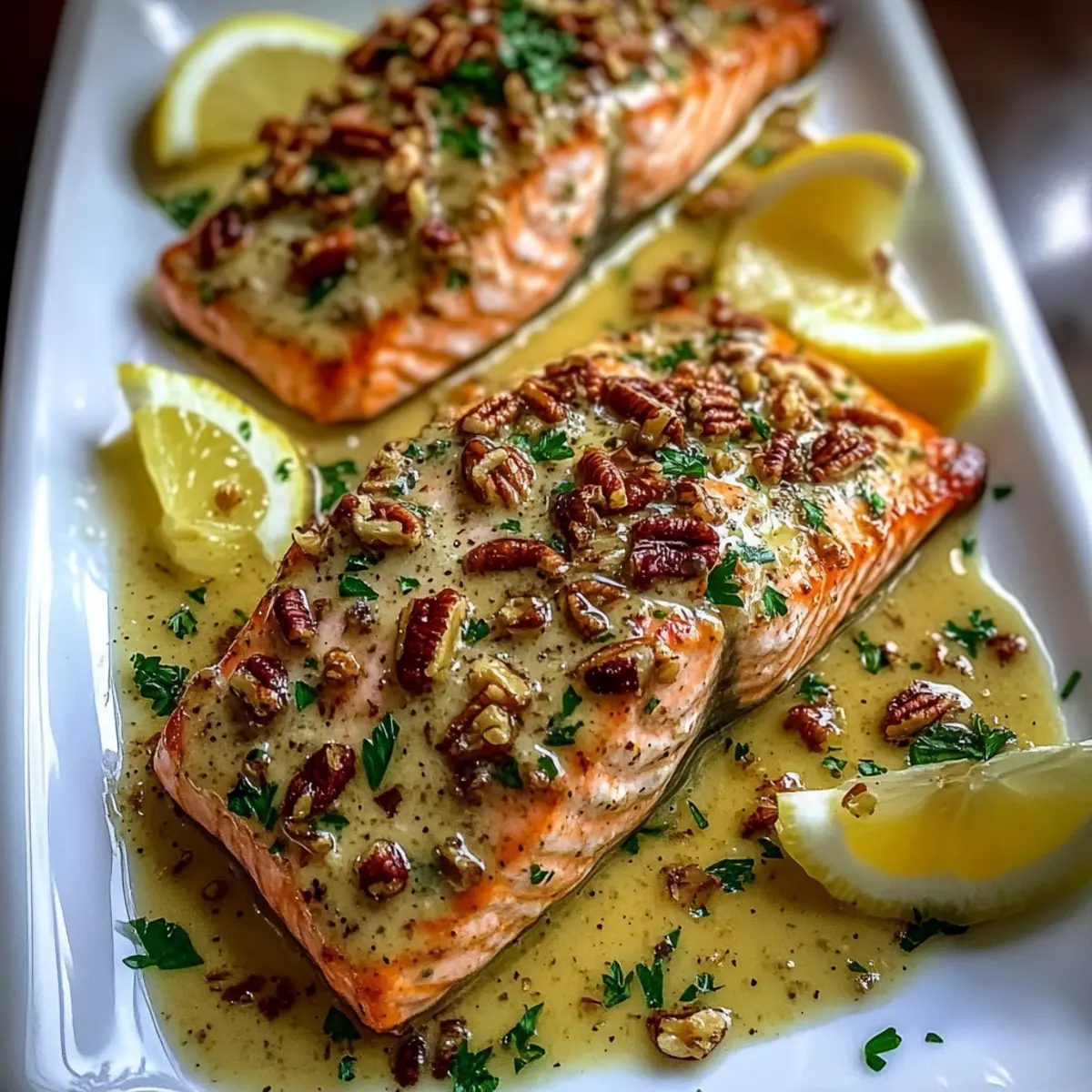
Once the salmon is cooked, remove it from the oven and let it rest for a few minutes. For an extra touch of brightness, garnish with lemon wedges before serving. This final step enhances the dish’s flavor profile, making your Baked Dijon Salmon a magnificent centerpiece for any meal.
Make Ahead Options
These Baked Dijon Salmon fillets are fantastic for meal prep, allowing you to enjoy a gourmet dish with minimal effort during busy weeknights! You can prepare the glaze (butter, Dijon mustard, and honey) up to 24 hours in advance and store it in the refrigerator, preventing the salmon from drying out during cooking. Additionally, the bread crumb and pecan topping can be mixed and kept in an airtight container for up to 3 days. When you’re ready to bake, simply season the salmon, spread the glaze, apply the topping, and bake as directed. This not only saves time but ensures that the salmon remains just as delicious and aromatic as when freshly made.
Expert Tips for Baked Dijon Salmon
-
Thaw Properly: Make sure your salmon is fully thawed before cooking to guarantee even baking and prevent dryness.
-
Watch the Crust: Keep an eye on the pecan topping as it bakes. It should reach a golden brown color, so avoid letting it burn for the best presentation and flavor.
-
Check Temperature: Use a meat thermometer to check for doneness—aim for an internal temperature of 145°F (63°C) to ensure the salmon is perfectly cooked and flaky.
-
Let it Rest: After baking, allow your Baked Dijon Salmon to rest for a few minutes. This helps achieve a tender, melt-in-your-mouth texture.
-
Experiment with Flavors: Don’t hesitate to try different mustard types or nuts in your recipe. Swapping Dijon for spicy mustard or pecans for walnuts adds exciting variations to this classic favorite!
Storage Tips for Baked Dijon Salmon
-
Fridge: Store leftovers in an airtight container, and enjoy within 2-3 days to maintain freshness and flavor.
-
Freezer: For longer storage, wrap individual fillets in plastic wrap and place them in freezer-safe bags. They can be frozen for up to 3 months.
-
Reheating: To enjoy the flaky texture of your Baked Dijon Salmon, reheat in the oven at 300°F (150°C) for about 8-10 minutes, ensuring the pecan crust stays crispy.
Baked Dijon Salmon Variations & Substitutions
Feel free to get creative with this Baked Dijon Salmon recipe and make it your own with enjoyable tweaks!
-
Nut Alternatives: Swap pecans for walnuts or almonds for a lovely twist in flavor. Both options add a satisfying crunch and earthy taste, enhancing the overall dish complexity.
-
Different Mustards: Use yellow mustard or whole-grain mustard if Dijon isn’t your favorite. Each provides a unique flair, complementing the salmon in a distinct way, creating an entirely different flavor heartbeat for your meal.
-
Sweetener Swap: Try maple syrup instead of honey for a delightful twist! The rich, caramel notes of maple syrup will mingle beautifully with the mustard, offering a unique sweet profile that pairs well with the omega-3-rich salmon.
-
Breadcrumb Crunch: For an extra crispy texture, substitute regular breadcrumbs with panko breadcrumbs. They’ll create a light and airy crunch that’s simply irresistible, adding a delightful contrast to the tender fish beneath.
-
Herbal Flavors: Replace fresh parsley with fresh dill or chives for a refreshing herbal note. Each herb introduces a seasonal vibe, allowing your Baked Dijon Salmon to shine in new, vibrant ways.
-
Spice It Up: Add a pinch of cayenne pepper to the breadcrumb mixture for a spicy kick! This will elevate the dish from savory to sizzling, catering to those who enjoy a little heat in their meals.
-
Lemon Zest Addition: Enhance the brightness even further by incorporating lemon zest into the glaze. This slight change adds layers of citrusy flavor that complement the mustard and salmon, resulting in a more dynamic dining experience.
-
Salmon Substitute: If you’re feeling adventurous, substitute salmon with trout or tilapia. Both fish bring a unique flavor profile while being equally delectable, ensuring your dinner is anything but ordinary.
For those keen on further culinary adventures, consider pairing your salmon with a fresh salad of baby spinach and cherry tomatoes or serving it alongside fluffy lemon herb rice for a complete meal experience that’s both delicious and satisfying!
What to Serve with Baked Dijon Salmon
Create a delightful meal pairing that elevates the flavors of your succulent salmon.
-
Crispy Green Salad: A refreshing salad with mixed greens, cucumber, and a tangy vinaigrette enhances the richness of the salmon for a balanced meal.
-
Lemon Herb Rice: Fluffy rice infused with lemon and herbs complements the salmon’s flavors beautifully, providing a zesty and fragrant base.
-
Steamed Asparagus: Tender asparagus spears drizzled with olive oil and lemon juice add a fresh, vibrant touch, contrasting with the crunch of the pecan crust.
-
Roasted Baby Potatoes: Crispy roasted potatoes seasoned with rosemary provide a satisfying crunch and hearty element to round out your dinner.
-
Garlic Bread: Warm, buttery garlic bread is perfect for mopping up the flavorful glaze from the salmon, adding a touch of indulgence.
-
Chilled White Wine: A crisp Sauvignon Blanc complements the dish’s delicate flavors, adding an elegant touch to your dinner table.
-
Chocolate Mousse: For dessert, a light and airy chocolate mousse offers a rich ending to your meal, balancing sweetness with the savory salmon.
Baked Dijon Salmon Recipe FAQs
How do I choose the best salmon for Baked Dijon Salmon?
Absolutely! When selecting salmon, look for fillets that are bright in color, with a moist appearance and no dark spots. Fresh salmon should have a mild ocean scent, not a strong fishy odor. If you’re using frozen salmon, ensure it’s properly thawed and still looks vibrant in color before cooking.
How should I store leftover Baked Dijon Salmon?
Very! Store any leftovers in an airtight container in the fridge, where they’ll stay fresh for about 2-3 days. It’s a great way to enjoy the delicious meal again! For best results, wait until the salmon is completely cooled before sealing it up.
Can I freeze Baked Dijon Salmon?
Absolutely! To freeze, wrap individual fillets tightly in plastic wrap and place them in freezer-safe bags. Make sure to remove as much air as possible to avoid freezer burn. They can be kept in the freezer for up to 3 months. When ready to eat, thaw in the fridge overnight before reheating.
What should I do if my pecan crust gets burnt while baking?
Oops! If you notice the topping is browning too quickly, cover the salmon loosely with aluminum foil to prevent it from burning while the fish continues to cook through. Always keep an eye on it towards the end of the baking time to achieve that perfect golden color without going overboard.
Are there any dietary considerations for Baked Dijon Salmon?
Yes! This dish is naturally gluten-free if you use gluten-free breadcrumbs. If you’re cooking for pets, remember that while salmon is generally safe for dogs in moderation, ensure there are no added seasonings. Always check with your veterinarian if you’re unsure about your pet’s diet.
Can I make substitutions for the nuts in the recipe?
For sure! If you’re allergic to pecans, or simply prefer something different, walnuts or slivered almonds are great alternatives. Just keep in mind that walnuts have a slightly more bitter flavor, while almonds will give a milder crunch. Explore and find a nut that you enjoy best!
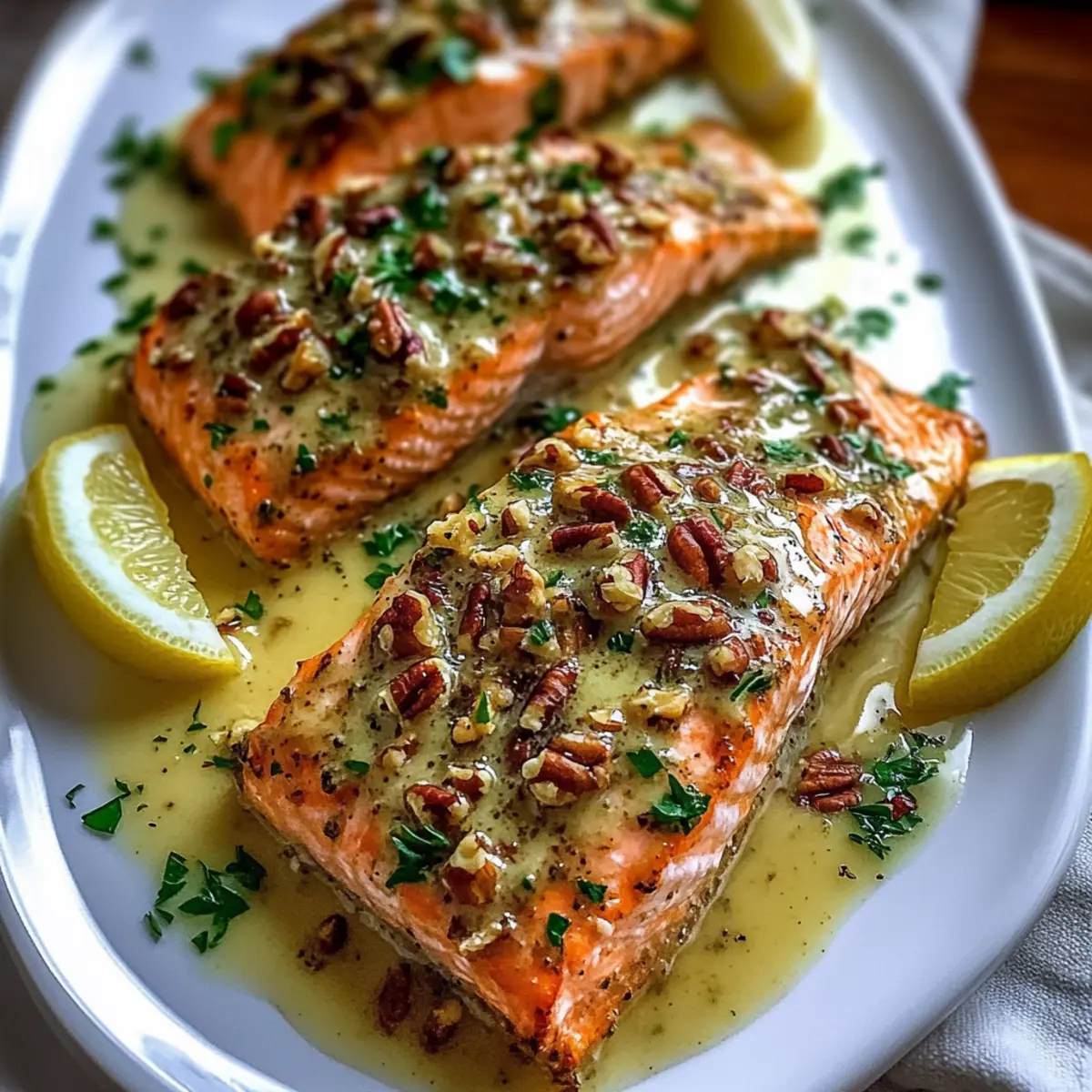
Baked Dijon Salmon: A Nutty Twist on a Classic Favorite
Ingredients
Equipment
Method
- Preheat your oven to 400°F (200°C).
- In a mixing bowl, combine melted butter, Dijon mustard, and honey, whisking until smooth.
- In another bowl, blend dry breadcrumbs, chopped pecans, and fresh parsley.
- Lightly grease a baking sheet and place the salmon fillets on it, skin side down. Season with salt and pepper.
- Evenly spread the Dijon mustard glaze over each salmon fillet.
- Press the breadcrumb mixture onto the top of the glazed salmon.
- Bake for 12-15 minutes until the fish flakes easily and the topping turns golden brown.
- Let the salmon rest, then garnish with lemon wedges before serving.